

Global and Luxembourgish News: 7th September 2026- 20th September 2026
Weeks 37-38:
Global markets navigated a challenging combination of renewed inflation pressure, record commodity prices and higher financing costs during Weeks 37 and 38. The surge in energy prices above $100 a barrel revived concerns about stagflation, while copper's record high demonstrated that supply constraints were extending beyond energy into strategically important industrial materials. At the same time, European policymakers intensified the debate over banking consolidation and deeper capital markets as the EU seeks greater financial competitiveness relative to the United States. In Luxembourg, the financial sector offered a comparatively resilient picture, with bank profit before provisions and taxes rising 5.4% in the first half of 2026 and commission income showing particularly strong growth. Mortgage activity also picked up, with the volume of newly granted variable-rate housing loans rising to €339 million in July as the average rate edged down to 3.17%. Together, these developments illustrate an unusual economic environment in which financial activity remains resilient even as inflation, commodity costs and borrowing conditions create mounting pressure on businesses and households.
Luxembourgish News
Luxembourg Bank Earnings Rise 5.4%

Picture: Stock Library
Luxembourg's banking sector reported stronger operating results for the first half of 2026, according to figures published by the CSSF on 14 September. Profit before provisions and taxes reached €5.33 billion, an increase of 5.4% compared with the first half of 2025. Net interest income increased by 3.3%, while net commission income recorded a considerably stronger 9.6% rise. The latter was particularly supported by depositary banks, alongside an 11.3% increase in the average net assets of collective investment undertakings used as a basis for custody fees. General expenses increased by 3.2%, but the sector's cost-to-income ratio improved from 45.3% to 44.8%. Higher provisions for risk meant that net profit nevertheless remained around the same level as in the first half of 2025.Fun fact:
Lower inflation increases real purchasing power when household incomes grow faster than the prices of the goods and services they consume.
Fun fact:
Cost-to-income ratio compares a bank's operating costs with its operating income; Luxembourg banks' ratio improved to 44.8%, from 45.3% a year earlier.
Source: CSSF
Luxembourg Mortgage Lending Picks Up

Picture: Stock Library
New mortgage lending in Luxembourg increased in July even as borrowing rates remained relatively elevated, according to data released by the Banque centrale du Luxembourg on 16 September. The average variable rate on new household mortgages declined slightly from 3.19% in June to 3.17% in July. At the same time, the volume of newly granted variable-rate mortgages rose by €44 million, reaching €339 million. Longer-term fixed rates showed a more mixed picture: loans fixed for more than five and up to ten years averaged 3.90%, while rates for some longer fixation periods declined. Corporate borrowing also remained active, with new loans above €1 million to non-financial companies increasing to €3.185 billion as their average variable rate declined to 2.84%. The figures suggest that credit activity can strengthen even when financing conditions remain substantially tighter than during the ultra-low-rate era.
Fun Fact:
A basis point equals 0.01 percentage points — so the fall in Luxembourg's variable mortgage rate from 3.19% to 3.17% represents a decline of 2 basis points.
Source: BCL
Global News
Energy Shock Revives Stagflation Fears
Picture: Stock Library
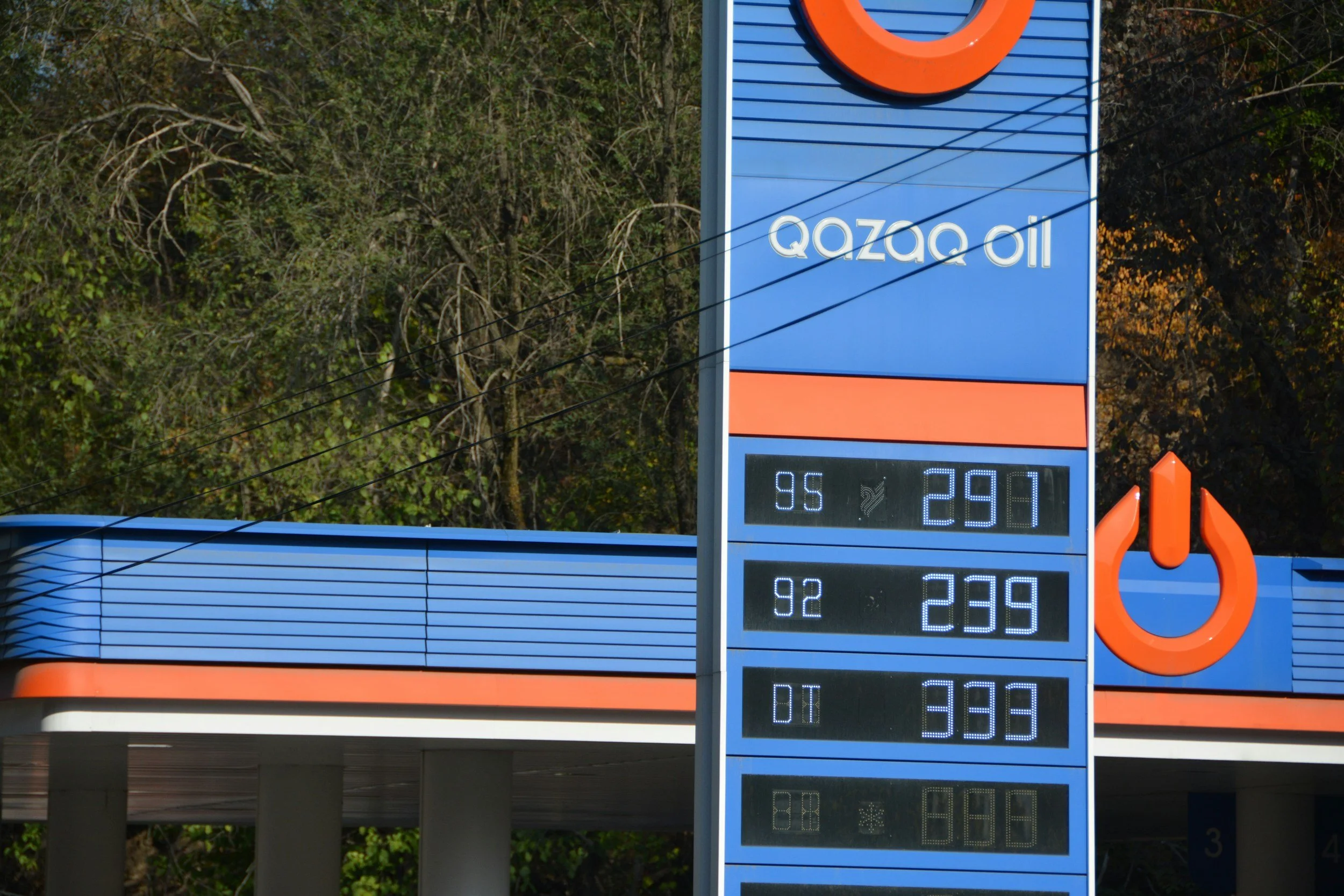
Global markets faced renewed stagflation concerns as rising energy prices collided with higher borrowing costs during the second half of September. Brent crude moved back above $100 a barrel amid escalating conflict in the Middle East and threats to major supply routes, while diesel, jet fuel and European natural gas also climbed sharply. At the same time, inflation remained above central-bank targets, with euro-area annual inflation reaching 3.3% in August and US headline inflation holding at 3.4%. Higher government bond yields have added another layer of pressure by increasing borrowing costs for households and businesses. Economic growth has so far remained surprisingly resilient, supported partly by heavy AI-related investment, but consumer-facing sectors are beginning to show signs of strain. The key question for markets is whether economies can maintain growth if elevated energy prices and interest rates persist.
Definition:
Stagflation describes an economy experiencing high inflation alongside weak or stagnant economic growth.
Source: Reuters
EU Pushes for Bigger Banks to Compete Globally

Picture: Stock Library
European policymakers are renewing calls for larger banks and deeper capital markets as the EU tries to narrow its competitive gap with the United States. At a meeting of EU finance ministers and central bank governors in Dublin, officials discussed reducing barriers to cross-border banking and limiting political interference in bank mergers. ECB Vice President Boris Vujčić said European banks compare well with US rivals in areas such as liquidity, capitalisation and profitability, but remain weaker in activities where greater scale matters, including trading and post-trading services. Differences in national tax and legal systems continue to fragment Europe's financial market and make cross-border expansion more difficult. Technology is another competitive concern, as large US banks can spend substantially more on IT, artificial intelligence and digital payments. The debate therefore extends beyond banking consolidation and into Europe's broader effort to create a more integrated capital market.
Definition:
The repo rate is the interest rate at which a central bank lends short-term money to commercial banks and is a key tool for influencing borrowing costs throughout an economy.
Source:Reuters
Copper Hits Record as Supply Tightens

Picture: Stock Library
Copper reached a record $14,728 per tonne on the London Metal Exchange during the period as global supply tightened and metal continued flowing toward the United States ahead of potential tariffs. The move stood out even within an already volatile commodity market and highlighted investors' growing attention to strategically important industrial metals. Copper is particularly significant because it is widely used in electricity networks, construction, electronics and the infrastructure required for electrification. Tight supply can therefore have consequences beyond commodity investors, increasing input costs for manufacturers and infrastructure projects. The record price also came while global bond yields were elevated and oil was approaching $100 a barrel, adding to concerns about broader cost pressures. For markets, copper is both a commodity story and an indicator of how supply constraints can feed into industrial inflation.
Fun fact:
Copper is often nicknamed “Dr. Copper” because its widespread industrial use means its price is frequently watched as an indicator of global economic and manufacturing conditions.
Source: Reuters
