

Global and Luxembourgish News: 18th November.- 7th December 2025 (Copy)
Weeks 47-49: Global markets were divided as euro-zone services activity surged to a 30-month high while U.S. manufacturing extended its downturn and the UN warned that the global financial system is increasingly fragile.
Economic data reinforced the growing divergence between services strength and industrial weakness across advanced economies, adding uncertainty to interest-rate and growth expectations.
In Luxembourg, Q3 GDP rose a solid 2.7 % and consumer confidence strengthened, signalling resilience at home despite global headwinds.
Luxembourgish News
Luxembourg Economy Grows 2.7% in Q3 2025

Picture: Stock Library
Luxembourg’s economy expanded by 2.7 % in the third quarter of 2025, marking one of the strongest quarterly performances in the EU. The financial sector continued to be the primary growth engine, benefiting from robust fund activity and steady cross-border financial services demand. Other sectors such as construction and business services also contributed but at a more moderate pace, reflecting tighter financing conditions and subdued corporate investment. The strong Q3 result improves the outlook for the full year and provides a cushion against lingering global uncertainty, particularly around trade and monetary policy. Economists caution, however, that sustaining this momentum will depend on external demand for financial services, labour-market stability and continued competitiveness initiatives. Nonetheless, the solid growth figure reinforces Luxembourg’s position as one of Europe’s most resilient service-driven economies.
Statistic:
Luxembourg’s Q3 growth of 2.7 % significantly outpaced the EU average, highlighting the strength of financial services and export-oriented sectors.
Source: LuxTimes
Luxembourg Consumer Confidence Rises Sharply in November 2025

Picture: Stock Library
Consumer confidence in Luxembourg rebounded significantly in November, according to the latest survey by the Banque centrale du Luxembourg. Households reported a more optimistic view of both their personal financial situation and the national economic outlook, marking one of the strongest sentiment shifts of the year. The improvement may reflect easing energy prices, stable employment conditions and a gradual adjustment of inflation expectations. Rising confidence typically translates into stronger domestic demand and could help support retail, hospitality and service-sector activity during the winter period. Policymakers view the rebound as an encouraging signal that households are regaining purchasing confidence despite global uncertainty. The data strengthens expectations that domestic consumption will remain an important pillar of growth heading into 2026.
Definition:
What is Consumer Confidence?
It measures how optimistic households feel about their finances and the economy.
Rising confidence often predicts stronger future spending, which supports GDP growth.
Source: BCL
Global News
Euro-Zone Services Lift Business Activity to 30-Month High
Picture: Stock Library
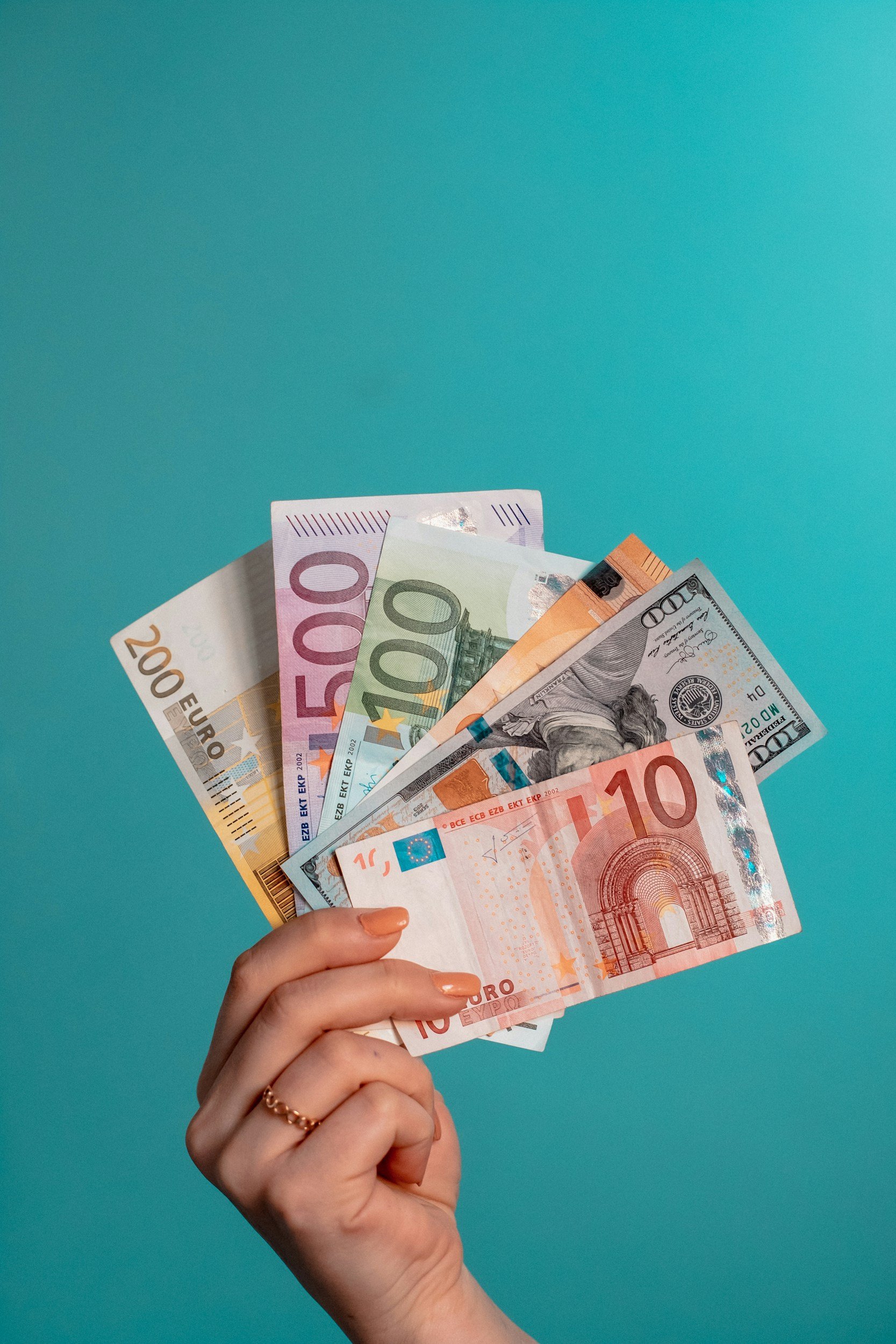
Euro-zone business activity accelerated sharply in November, with the composite PMI rising to 52.8, its strongest expansion in two and a half years. The improvement was driven almost entirely by the services sector, where firms reported a notable increase in new business, improved demand conditions and steady employment. This resilience contrasts with ongoing weakness in manufacturing, which continues to face softer export demand, elevated input costs and supply-chain pressures. Despite the uneven performance across sectors, the rebound supports the view that consumer-driven segments of the economy may help sustain modest growth into early 2026. While input costs rose again, output-price inflation moderated, suggesting that companies may be absorbing some cost pressures to maintain competitiveness. Economists say the data may influence the ECB’s rate trajectory, as stronger activity reduces urgency for early rate cuts, especially with inflation still above target.
Definition:
What is PMI?
The Purchasing Managers’ Index (PMI) measures business activity.
A value above 50 means expansion, below 50 means contraction.
A rise to 52.8 signals strong momentum in services.
Source: Reuters
U.S. Manufacturing Slump Deepens; Factory Sector Contracts Again

Picture: Stock Library
U.S. manufacturing contracted for the ninth consecutive month in November, underscoring ongoing structural challenges in the industrial sector. The latest PMI figures showed declines in new orders, production and employment, with many firms citing tariffs, weak global demand and rising input costs as persistent headwinds. Some manufacturers also reported slower investment plans as uncertainty around trade policy and interest rates remained high. The downturn in the sector could have broader implications, as manufacturing still influences supply chains, freight activity and regional labour markets. Investors responded cautiously, rotating away from cyclical and industrial stocks toward defensive assets such as Treasuries and utilities. The continued weakness raises questions about the sustainability of U.S. growth heading into 2026, with analysts increasingly focused on whether the services sector can offset prolonged industrial softness.
Statistic:
U.S. manufacturing has now contracted for nine consecutive months, the longest downturn in over a decade.
This matters because manufacturing still influences jobs, exports and supply-chain stability.
Source: Reuters
UN Warns Global Financial System Must Adapt to Support Trade and Development

Picture: Stock Library
A new UNCTAD report warns that the global financial architecture is no longer fit for purpose in an increasingly interconnected trading environment. According to the agency, over 90 % of global trade depends either directly or indirectly on bank financing or U.S.-dollar-linked payment channels, creating a high degree of systemic vulnerability. Periods of financial stress, including dollar liquidity shortages, can therefore rapidly spill over into trade volumes, commodity flows and economic development, especially in emerging markets. UNCTAD argues that without reforms — including broader access to sustainable finance, expansion of local capital markets and more stable cross-border liquidity — developing economies risk repeated cycles of disruption. The report comes at a time when geopolitical fragmentation and tighter monetary conditions are already pressuring global supply chains and investment flows. Analysts note that the alarm aligns with calls from multilateral institutions urging modernization of financial infrastructure to safeguard long-term global growth.
Fun Fact:
Over 90 % of global trade relies on bank financing or U.S.-dollar–based payment systems.
This means when financial markets wobble, global trade feels the shock almost immediately.
Source: Reuters
