

Global and Luxembourgish News: 29th March- 12th April 2026
Weeks 14-15:
Global markets entered April under the pressure of a renewed energy and geopolitical shock, with the IMF and World Bank preparing to cut growth forecasts and lift inflation projections as higher oil prices, weaker trade conditions and sovereign stress ripple across economies. In the US, March inflation confirmed how quickly energy can reprice the macro outlook, with headline CPI accelerating and markets leaning toward a longer period of unchanged Federal Reserve rates. In Europe, the ECB’s endorsement of stronger EU-level supervision signalled that structural competitiveness and capital-markets reform remain central policy themes alongside short-term inflation management. In Luxembourg, the same global energy shock showed up clearly in March inflation data, where higher fuel costs pushed the national rate sharply higher and revived debate over purchasing power and indexation. At the same time, BCL banking figures suggested that while aggregate balance sheets softened, domestic lending and deposits remained resilient.
Taken together, the period illustrates a classic late-cycle policy mix: inflation risk has returned, growth expectations are being trimmed, and regulators are simultaneously trying to strengthen market architecture for a more volatile world.
Luxembourgish News
Luxembourg inflation nearly doubles on energy spike
Picture: Stock Library
Luxembourg’s annual inflation rate rose to 2.4% in March from 1.4% in February, according to Statec data reported by Luxembourg Times. The sharp move was driven primarily by energy, with prices in that category jumping 6.1% month-on-month after having fallen in eight months since January 2024. Statec said the biggest monthly increase on record for motor fuels was a key contributor, while fuel oil also rose sharply. Services inflation also firmed to 2.5% year-on-year and food prices rose 2.7%, showing that the inflation pulse was not confined entirely to energy. At the same time, stable gas and electricity prices prevented an even larger jump in the overall index. For Luxembourg households and businesses, the release matters because it revives concerns around purchasing power, wage indexation and cost pressure in a small open economy highly exposed to imported energy shocks.
Statistic:
Luxembourg’s annual inflation rate moved from 1.4% in February to 2.4% in March 2026.
Source: Luxembourg Times
Luxembourg bank balance sheet shrinks, but lending still rises

Picture: Stock Library
The Banque centrale du Luxembourg said the aggregated balance sheet of credit institutions stood at €1,000.949 billion at the end of February, down 0.62% from January. The decline was mainly driven by lower interbank loans and deposits, pointing to softer balance-sheet activity between banks rather than a broad-based contraction in domestic credit. In fact, loans to resident non-bank customers increased by €816 million month-on-month, and were up 4.71% over twelve months. Deposits from the resident non-bank sector also rose by €659 million on the month and by 4.25% year-on-year. The detail suggests Luxembourg’s banking system remained active in the domestic economy even as aggregate balance-sheet size dipped. For readers, the main takeaway is that headline balance-sheet contraction did not translate into weaker private-sector lending momentum.
Definition:
A bank’s balance sheet is the snapshot of its assets, liabilities and capital at a given date.
Source: BCL
Global News
IMF warns war shock will cut growth and lift inflation

Picture: Stock Library
UThe IMF and World Bank entered their April meetings warning that the Middle East conflict has become a third major shock to the global economy after the pandemic and Russia’s 2022 invasion of Ukraine. Reuters reported that both institutions are now preparing to downgrade growth forecasts and raise inflation projections, with emerging markets expected to bear the heaviest burden through higher energy costs, weaker demand and tighter financing conditions. The World Bank’s baseline now sees emerging-market and developing-economy growth at 3.65% in 2026, down from 4% previously, and as low as 2.6% in a worse scenario. Inflation for those economies is now seen at 4.9%, versus a prior 3.0%, and could rise to 6.7% if the shock persists. The institutions are also preparing emergency support, with the IMF estimating demand for $20–50 billion and the World Bank saying it could mobilise up to $70 billion over six months. The broader message for investors is that geopolitics has moved back to the centre of macro forecasting, with energy, food security and sovereign risk all re-priced at once
Statistic:
The World Bank’s baseline for emerging-market growth in 2026 was cut to 3.65%, down from 4.0%.
Source: Reuters
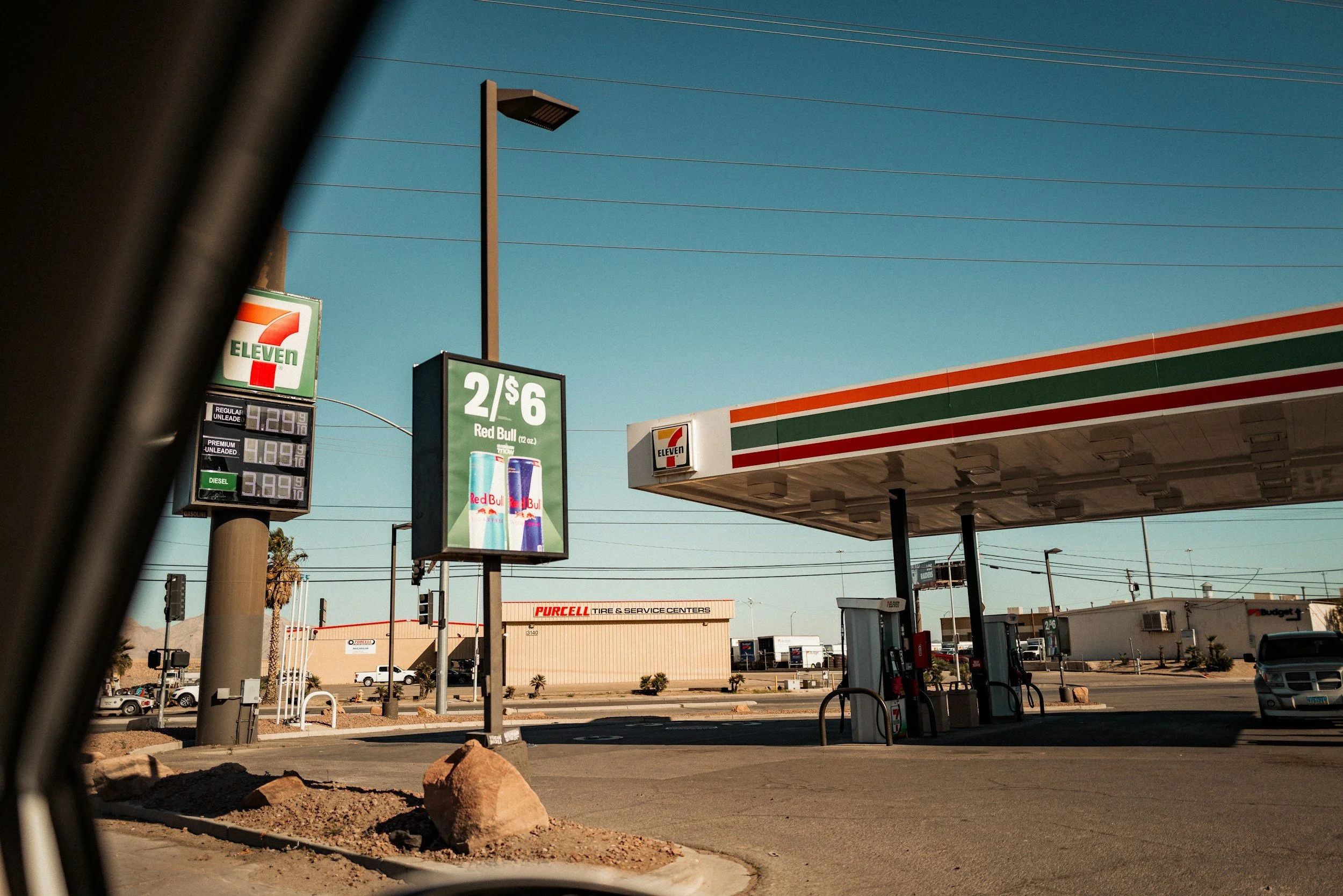
US inflation jumps as gasoline shock hits consumers
Picture: Stock Library
US consumer prices rose sharply in March, with Reuters reporting a 0.9% monthly gain in the Consumer Price Index, the biggest increase since June 2022. Annual CPI accelerated to 3.3% from 2.4% in February, while core inflation edged up to 2.6%, suggesting the first-round energy shock was already visible even before broader pass-through effects fully emerged. Gasoline prices were the main driver, surging 21.2% in March, the largest increase since the government began consistently tracking the series in 1967. Economists cited by Reuters said the relatively contained core number would give little comfort to the Federal Reserve because secondary effects from transport, airfares and goods shipping may still be ahead. Markets responded by continuing to price a long period of unchanged rates, with Reuters noting traders still largely see the Fed on hold through the end of 2026. The development matters because it reinforces the idea that inflation can re-accelerate quickly when energy shocks collide with an already resilient labour market.
Fun Fact:
March’s 21.2% rise in US gasoline prices was the biggest since the series began being tracked consistently in 1967.
Source: Reuters
ECB backs push for centralised EU market supervision

Picture: Stock Library
The ECB endorsed the European Commission’s proposal to move supervision of major cross-border financial market players from national regulators to ESMA, in what Reuters described as a significant step toward deeper capital-markets integration. The initiative is meant to improve EU competitiveness as the bloc faces weak growth and stronger competition from the United States and China. The ECB said it supports stronger EU-level oversight for systemically important venues, central counterparties, central securities depositories and crypto-asset service providers. At the same time, it warned that ESMA would need adequate staffing, funding and a carefully sequenced transition to avoid disruption. The proposal also carries political weight because some smaller member states, including Luxembourg and Ireland, have been less enthusiastic about shifting supervision away from national authorities. For markets, this is a structural story rather than a cyclical one: it points to a slower but potentially important re-engineering of how European capital markets are governed.
Definition:
VESMA is the European Securities and Markets Authority, the EU body proposed to take on more direct oversight of major cross-border market players.
Source:Reuters
